
Shoulder Pain is common in athletes, workers, and older adults, often linked to overuse, strain, or injury.
A Bit of History
Ancient physicians documented shoulder dislocations in wrestlers and soldiers, treating them with bandages and immobilization. Hippocrates himself described a technique for reducing a dislocated shoulder using traction and counter-pressure from the physician's own foot placed in the patient's armpit — a method still referenced in orthopedic teaching today, even if the tools have changed. For centuries afterward, treatment remained largely limited to splinting and rest, since the shoulder's complex web of muscles, tendons, and ligaments wasn't yet well understood.
 With Renaissance anatomy, the shoulder's complexity became better understood. Detailed anatomical study during this period — most notably by Andreas Vesalius, whose dissections corrected centuries of inherited anatomical error — revealed the shoulder as a shallow ball-and-socket joint held together primarily by surrounding soft tissue rather than bone, explaining both its remarkable range of motion and its vulnerability to injury. This shift from guesswork to direct observation laid the groundwork for more precise diagnosis of shoulder conditions in the centuries that followed.
By the 20th century, sports medicine emphasized exercise and rehabilitation. As organized athletics grew and injuries like rotator cuff tears and impingement became better recognized, physicians and trainers began shifting away from prolonged immobilization toward early, guided movement — recognizing that a stiff, underused shoulder often healed worse than one kept appropriately mobile. This era also saw the rise of physical therapy as a distinct discipline, giving patients a structured path back to strength and function after injury.
Today, conservative care uses chiropractic, massage, and rehabilitation to restore function without invasive methods. Rather than treating the shoulder in isolation, modern approaches often consider the neck, upper back, and posture as a connected system, since dysfunction in any one area can shift stress onto the shoulder joint itself.
How this Can Help You
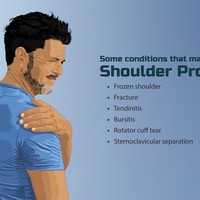
Shoulder pain can show up in many different ways, from frozen shoulder (adhesive capsulitis) and general joint issues to rotator cuff injuries, deltoid strains, and problems affecting the surrounding ligaments and tendons. Impingement syndrome, bursitis, labral tears, and shoulder instability or dislocation are also common culprits, each with its own pattern of pain, weakness, or restricted motion. Because so many different structures work together in the shoulder, an accurate diagnosis is the first step toward choosing the right combination of care.
Shoulder pain may limit range of motion and disrupt daily activities, turning simple tasks like reaching overhead, sleeping on one side, or lifting a bag into a source of frustration. Because the shoulder relies on such a delicate balance of muscles and tendons, small imbalances or old injuries can gradually snowball into impingement, tendinitis, or reduced mobility if left unaddressed.
Care can support smoother mobility, reduced irritation, and stronger posture. Restoring proper motion to the joint and surrounding tissue — through adjustment, soft tissue work, and targeted exercise — helps take pressure off irritated structures and rebuilds the strength needed to keep the shoulder stable through everyday movement, not just in the clinic.
Patients often report better comfort and steadier recovery with layered care, meaning a combination of hands-on treatment and guided rehabilitation rather than any single approach alone. This layered strategy tends to hold up better over time, since it addresses both the immediate discomfort and the underlying mechanics that caused it in the first place.
Make an appointment today for shoulder pain or anything else we can help with.
Ready for some relief? Schedule your Shoulder Pain appointment today.
Take the first step toward better health with our professional shoulder pain services. Contact us today to schedule your consultation and discover how we can help you achieve your wellness goals.
Find Us Here
401 Meadowlands Dr Ste 101
Hillsborough, NC 27278
Monday: 9:00 – 1:00 & 3:00 – 5:00
Tuesday: 9:00 – 1:00 & 3:00 – 5:00
Wednesday: 9:00 – 1:00 & 3:00 – 5:00
Thursday: 9:00 – 1:00 & 3:00 – 5:00
Friday: 9:00 – 1:00
Saturday: Closed
Sunday: 10:00 – 1:00 (By Appointment)