
Yes. It’s true.
It is often discussed as the “thing” behind appetite control, weight loss, and blood sugar support. Technically, semaglutide is the medication’s active ingredient, while GLP-1 is the natural hormone pathway it mimics. Tiny distinction. Big deal.
Here is the part many people miss: your body already makes GLP-1 naturally.
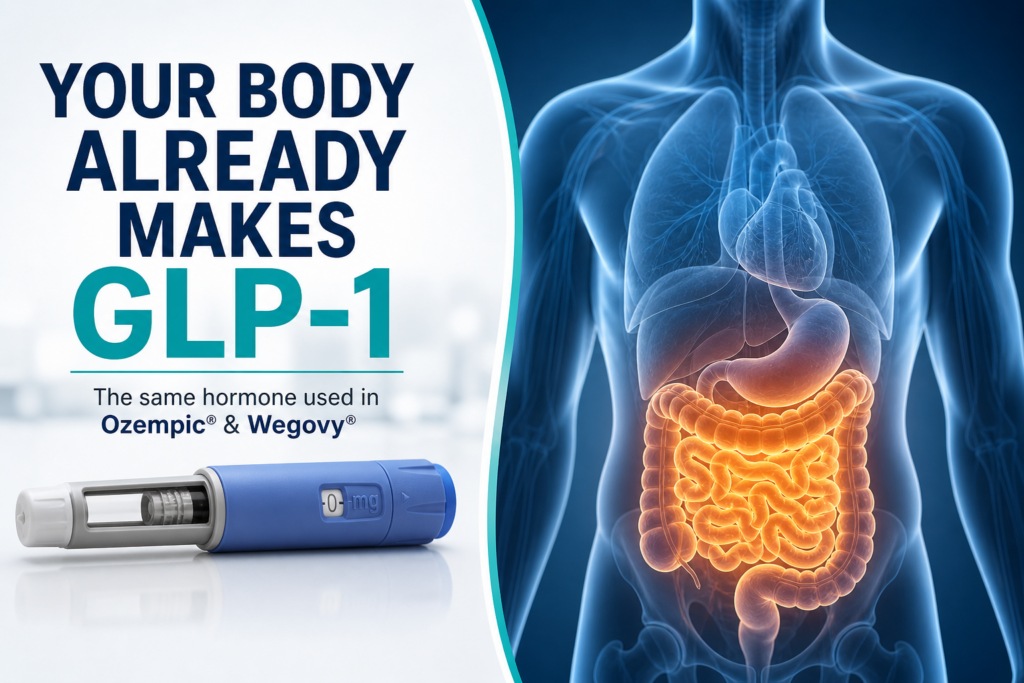
GLP-1, short for glucagon-like peptide-1, is a hormone released mainly from specialized cells in the gut after you eat.1 It helps your body manage appetite, digestion, insulin response, and blood sugar balance.2
In other words, your body already has a built-in system for helping you feel satisfied, regulate blood sugar, and manage energy. The question is whether that system is being supported well.
What Does GLP-1 Do?
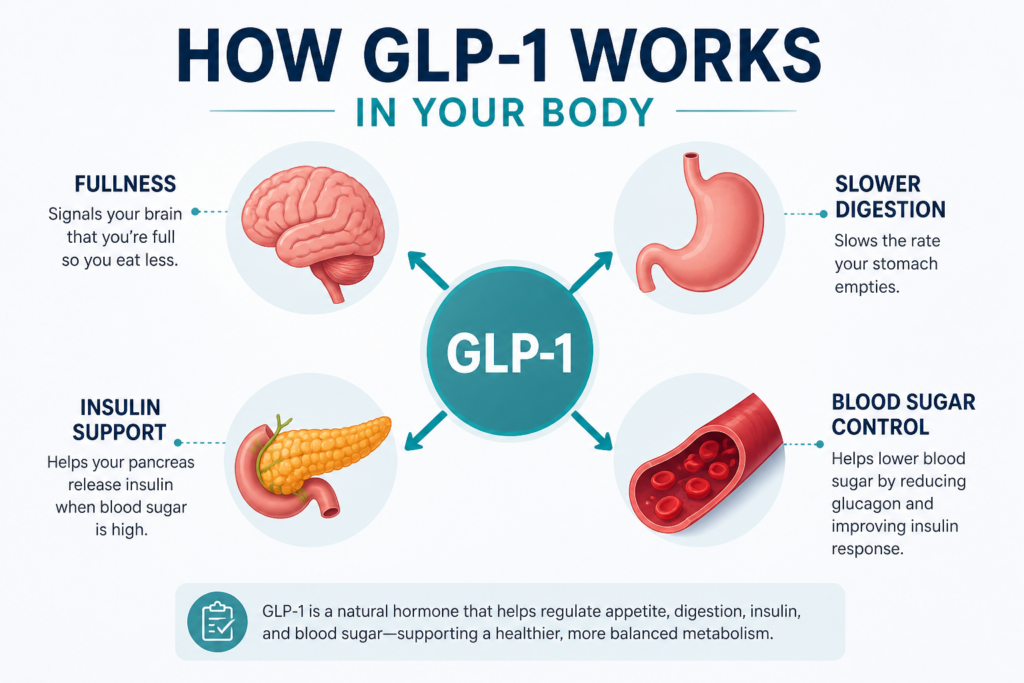
GLP-1 plays several important roles in metabolic health. After you eat, it helps signal fullness to the brain, slows how quickly food leaves the stomach, supports insulin release when blood sugar rises, and helps reduce glucagon, a hormone that raises blood sugar.3
That combination matters because appetite, cravings, blood sugar, and energy are not separate issues. They are connected through hormones, digestion, the nervous system, and your daily habits.
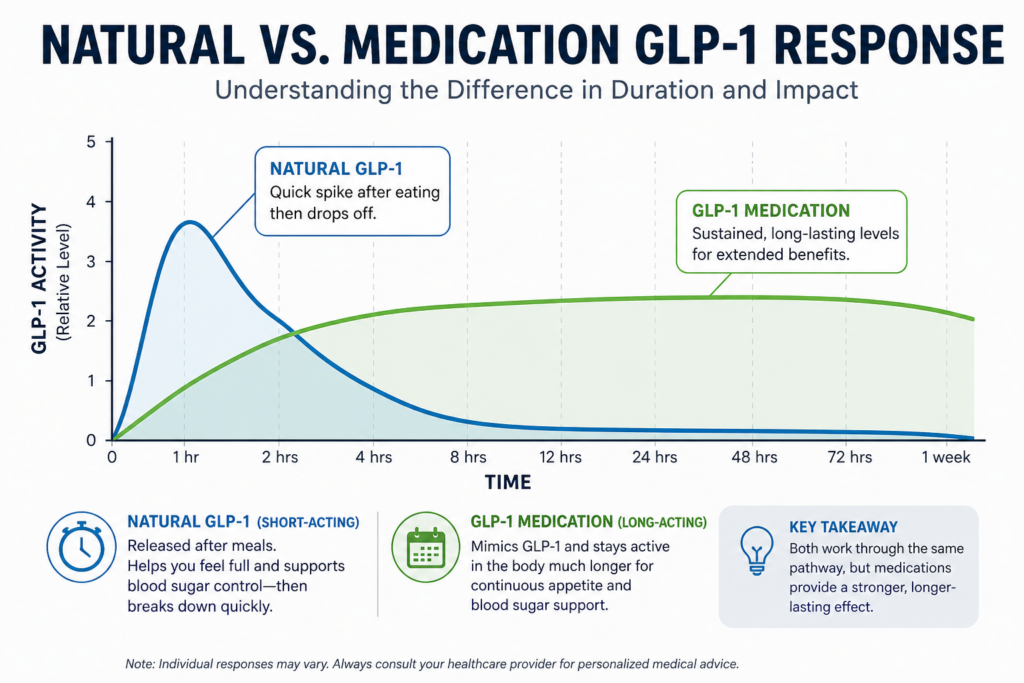
This is one reason GLP-1 medications have become so widely discussed. They act on the same receptor pathway your natural GLP-1 uses, but they are designed to last much longer in the body.3
Natural GLP-1 vs. GLP-1 Medications
Your natural GLP-1 rises after meals, does its job, and then breaks down quickly. Medications like semaglutide are GLP-1 receptor agonists, meaning they mimic the effect of GLP-1 but stay active longer and produce a stronger, more sustained signal.3
So, no, eating more fiber is not the same as taking a prescription medication. Let’s not pretend broccoli is wearing a lab coat.
But lifestyle still matters. Your food choices, activity level, gut health, and blood sugar patterns can influence your body’s natural GLP-1 response.4 For many people, improving those basics can support better appetite control, steadier energy, and healthier weight management.
How Your Body Makes GLP-1 Naturally
GLP-1 is produced primarily in the intestinal tract, especially after nutrients enter the gut.1 The body responds to what you eat, how quickly food moves through digestion, and what your gut bacteria produce as they break down certain fibers.5
Researchers are also finding that GLP-1 biology may be more flexible than previously understood. Duke resView Postearchers have reported that pancreatic alpha cells may be able to produce GLP-1 under certain conditions, suggesting the body has more than one way to influence this hormone pathway.6
That does not mean everyone’s GLP-1 system works perfectly. It means the system is real, responsive, and worth supporting.
Foods That Help Support GLP-1
Certain nutrients appear to stimulate GLP-1 more than others. Protein is one of the strongest dietary triggers. Meals that include adequate protein tend to improve fullness and may help reduce overall calorie intake.4
Fiber is another major player, especially soluble and fermentable fiber. These fibers slow digestion and feed beneficial gut bacteria. As gut bacteria ferment fiber, they produce short-chain fatty acids, which may stimulate GLP-1 release.5
Good sources include vegetables, beans, lentils, oats, chia seeds, flaxseed, berries, and other whole foods. Revolutionary? No. Effective? Often, yes.
If you want help building meals that support appetite control and energy without turning food into a spreadsheet, Health Center of the Triangle offers nutrition counseling focused on sustainable, evidence-based choices.
Exercise Can Also Improve GLP-1 Activity
Exercise does more than burn calories. Regular physical activity can improve insulin sensitivity, support blood sugar regulation, and may enhance GLP-1 response over time.4
Both aerobic exercise and resistance training can be useful. Walking, cycling, strength training, and consistent movement all support metabolic health. The goal is not punishment. It is consistency.
This is especially important for people working on weight management, because long-term success usually depends on habits that support the body’s signals instead of fighting them every day.
Gut Health Matters More Than People Think
Because much of your GLP-1 is produced in the gut, digestive health matters. The gut microbiome helps process fiber and produces compounds that influence hormone signaling, inflammation, and metabolism.5
A diet built around whole foods, protein, fiber, and fewer ultra-processed foods may support a healthier gut environment. That can help your natural appetite and blood sugar signals work more efficiently.
This is not about chasing perfection. It is about giving the body better inputs so it can produce better outputs. Wild concept, apparently.
Blood Sugar Stability Supports the Whole System
Large blood sugar swings can leave people feeling hungry, tired, irritable, and snacky. Balanced meals can help reduce those swings by combining protein, fiber, healthy fats, and slower-digesting carbohydrates.
That kind of meal structure supports insulin response and may help GLP-1 signaling do its job more effectively.2
For people looking for structured support, safe weight management can be a better path than extreme dieting, especially when the goal is steady progress instead of short-lived results.
Can Natural GLP-1 Replace Medication?
 Sometimes lifestyle changes are enough to improve appetite, energy, and weight patterns. Sometimes they are not. GLP-1 medications can be appropriate and helpful for some patients, especially when prescribed and monitored by a qualified medical provider.
The point is not “natural versus medication.” That framing is too simplistic and usually turns into internet nonsense with nicer fonts.
The better question is: How can you support the body’s natural metabolic systems as well as possible?
Whether someone uses medication or not, the foundations still matter: protein, fiber, movement, sleep, stress management, gut health, and blood sugar stability.
How to Support GLP-1 Naturally
To support your body’s natural GLP-1 system, start with the basics:
- Include protein with meals.
- Increase fiber from whole foods.
- Choose minimally processed foods more often.
- Exercise consistently, including strength and cardio.
- Support gut health with fiber-rich foods.
- Avoid extreme blood sugar swings.
If you are working on appetite control, metabolic health, or weight goals, Health Center of the Triangle can help with weight loss support, wellness care, and practical nutrition strategies designed around real life.
The Bottom Line
Your body already produces GLP-1, the same hormone pathway targeted by medications like Ozempic®, Wegovy®, and semaglutide.
Those medications are stronger and longer-lasting than your natural GLP-1 signal. But your natural system is still powerful, responsive, and heavily influenced by your daily habits.
By focusing on protein, fiber, exercise, gut health, and blood sugar stability, you can support the systems your body already uses to regulate appetite, energy, and metabolism.
If you want help creating a realistic plan, you can schedule an appointment with Health Center of the Triangle or contact the office to learn more.
This content is for general information and marketing education only and isn’t a substitute for professional medical advice. Always consult a qualified healthcare provider for diagnosis or treatment.
Resources
- Ohio State Health & Discovery.
Tips for activating your GLP-1 levels naturally
. - PCCA.
GLP-1: The Naturally Produced Hormone
. - Holst JJ.
The physiology of glucagon-like peptide 1
. Physiological Reviews. 2007. - GoodRx.
How to Increase GLP-1 Naturally With Supplements and Foods
. - Beaufort Memorial.
Getting GLP-1 the Natural Way: How to Do It and How It Helps
. - Duke University School of Medicine.
Alpha Cells Moonlight as Secret GLP-1 Factories
.